Digital Service Record Trade-In Value. The Real Number
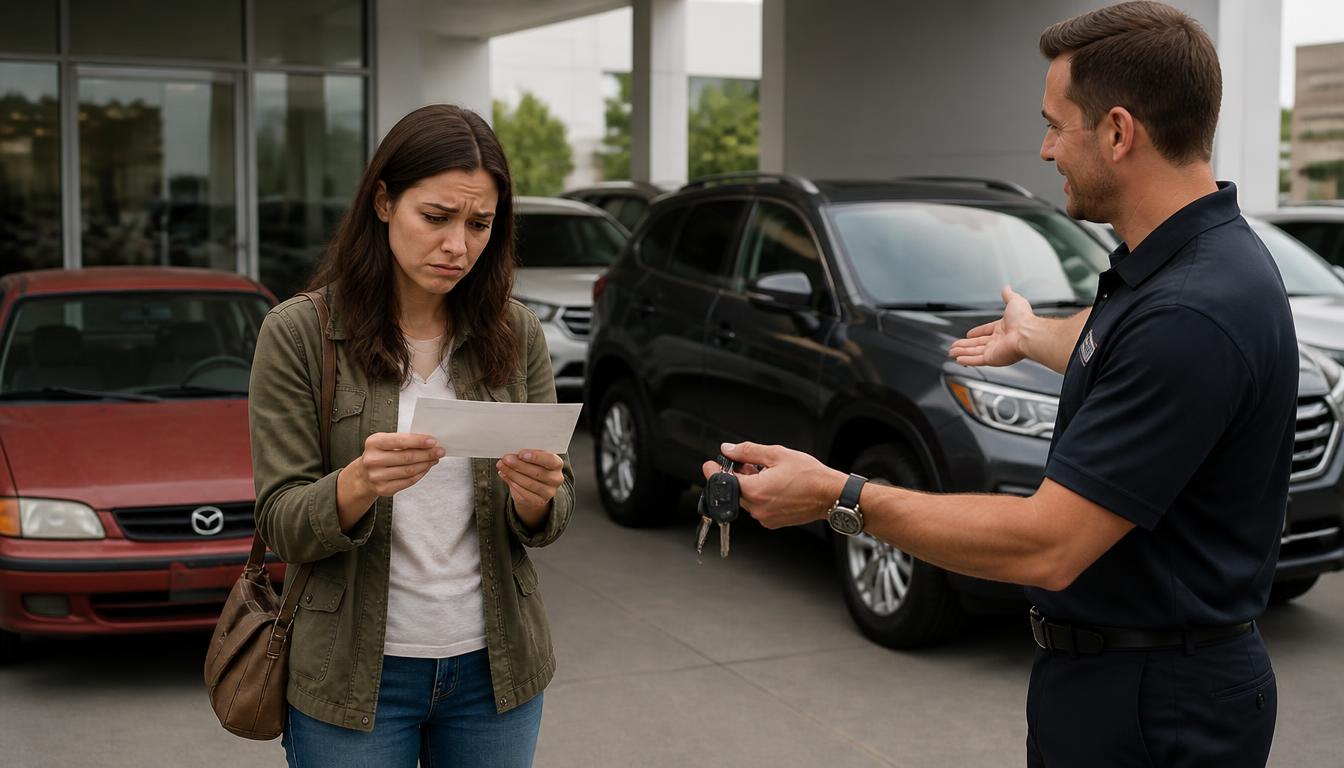
The most expensive invoice is the one you can't find. That's not a metaphor. It's what happens at the trade-in table when a dealer asks for service history and you hand over a half-remembered list, a stamped logbook with three gaps, or nothing at all.
Your digital service record trade-in value is real money. Not "it helps a bit" money. We're talking 10 to 15% of the car's value, gone, because you couldn't prove what was done and when.
This post covers what that gap actually costs, why the old ways fall short, and what a proper digital record looks like compared to the alternatives.
What Does a Missing Service History Actually Cost You at Trade-In?
Picture this. You've kept the car in good shape. Regular oil changes, new tyres last year, timing belt done at the right kilometre mark. You know that. But the dealer doesn't.
Without documentation, the dealer assumes the worst. They've bought cars that looked good and turned out to be disasters. Their offer reflects their risk, not your reality. That discount comes straight off your number.
On a $28,000 car, 10 to 15% is $2,800 to $4,200. That's not a rounding error. That's a year of servicing costs, or a decent holiday, sitting in someone else's pocket because your receipts are in a box under the bed.
Private buyers do the same thing. A car with a clean, documented history sells faster and at a higher price than an identical car with a shrug and a "I think I've got some receipts somewhere."
Why Paper Records Keep Failing Car Owners
Paper isn't the problem. Scattered, fragile, impossible-to-find paper is the problem.
Think about how service records actually accumulate over five years of owning a car.
- The original dealer services the car for two years.
- You move suburbs and find a local mechanic you like.
- The tyre shop does a rotation and an alignment, separate invoice.
- A smash repairer fixes a bumper, different system entirely.
- You email the mechanic once asking for a copy of last year's invoice. He says he'll send it. He doesn't. You forget.
By the time you go to sell, the history exists in five different places, three of which you've lost access to. Nobody was doing anything wrong. The process just wasn't built for how cars actually get serviced.
The Old Way vs a Digital Record: A Straight Comparison
| Method | What it stores | Where it fails | Trade-in strength |
|---|---|---|---|
| Stamped logbook | Date, odometer, signature | No detail on what was actually done | Weak without invoices |
| Paper receipts in a folder | Full invoice detail | Lost, faded, incomplete across shops | Good if complete, rare |
| Workshop's own system | Every job at that shop | Useless when you change workshops | Partial only |
| Photos of receipts | Whatever you remembered to photograph | Gaps, hard to search, no structure | Better than nothing, barely |
| Digital record across shops | Every invoice, every shop, in one place | Only works if you actually use it | Strongest available |
The verdict is simple. A complete digital record that follows the car across workshops is the only method that holds up at trade-in time without requiring you to have been perfectly organised for five years.
What Buyers Actually Check and Why It Matters
Dealers and serious private buyers are looking for three things in a service history.
- Regularity. Was it serviced on time, or are there 18-month gaps that suggest it was run into the ground?
- Specificity. What was actually done? "Service" stamped in a logbook tells them nothing. An itemised invoice showing filters, fluids, brake pads and a brake fluid flush tells them everything.
- Credibility. Does the history look real? Invoices with workshop names, ABNs, dates and part numbers are credible. A handwritten list is not.
A digital record that shows all three, across every workshop the car has visited, is the closest thing to a clean bill of health that you can hand over.
What About Manufacturer Service Intervals and Warranty?
Under Australian Consumer Law, your statutory consumer guarantees apply regardless of whether you service at a dealer. Generally, you are not required to use a dealership to maintain your statutory rights, provided the servicing is carried out to the manufacturer's specifications and you can prove it was done. The ACCC is the authority on this. Check their guidance directly, and if your specific situation involves a warranty dispute, get your own advice.
The point is that proof matters legally, not just commercially. An itemised digital record showing the correct oil specification, the correct interval and the correct parts is your evidence if a dispute arises.
The Real Options for Keeping a Digital Service Record
Let's be honest about what's available and where each one falls short.
A) Your workshop's app or portal. Convenient while you're with that workshop. Falls apart the moment you move or change mechanics. Not portable.
B) Google Drive or a folder on your phone. Free and flexible, but requires you to be consistent. Miss a few invoices and the record is no more credible than the shoebox method.
C) Dedicated vehicle history apps. Some exist and are genuinely useful. The problem is they rely on you inputting data manually or connecting to specific workshop systems. Most Australian independent mechanics aren't integrated.
D) A service account that follows the car across shops. This is where Meckly fits in. It's free to use with any workshop that's on the platform. Every invoice from every participating shop lands in your account automatically. Nothing to enter manually, nothing to photograph, nothing to chase. The base account costs you nothing. If you want a car's complete cross-shop history searchable in one place, that's Meckly Fleet, the paid upgrade that adds a specific car and pulls together every invoice from every shop it has ever visited.
None of these are perfect for every person. If you've had the same mechanic for ten years and you're never moving, their system probably has everything. If you've used three shops, moved twice, and your car is four years old, you need something that travels with the car.
Three Things to Do Right Now If You Plan to Sell in the Next Two Years
- Ring every workshop the car has visited and ask for a copy of all past invoices. Most will send them. Do this before anyone leaves or retires or their system gets upgraded. Get PDFs, not printouts.
- Check your logbook for gaps and work out if you can account for them. A six-month gap with an invoice showing a major service is fine. A gap with nothing is a negotiating point for the buyer.
- Set up a single place to store every future invoice the moment it arrives. The problem is never the next service. It's the one after that, and the one after that, when you've stopped paying attention.
Frequently Asked Questions
How much does a digital service record increase trade-in value?
A complete, verifiable service history can return 10 to 15% more at trade-in compared to a car with no records. On a $25,000 car that is $2,500 to $3,750 sitting in a shoebox or not at all. The exact figure depends on the car's age, make and the buyer, but dealers and private buyers both negotiate harder when history is missing.
Is a digital service record accepted at trade-in in Australia?
Yes. Most dealerships and used-car buyers accept digital records, especially when they come with timestamped invoices and clear workshop details. A PDF saved to your phone is a start, but a proper digital log that shows every service, every invoice and every shop in one place carries more weight than a folder of photos.
What if I have some receipts but not all of them?
Partial history is better than none, but gaps still invite negotiation. A buyer or dealer will assume the worst about any period you can't account for. If you can get your regular workshop to resend past invoices, do it now before you list the car, not on the day of the sale.
Does a logbook or stamp still count, or has digital replaced it?
A stamped logbook still counts and is required for some manufacturer warranty claims. The problem is it only records that a service happened, not what was actually done or what was replaced. A digital record with actual invoices attached is far more convincing because a buyer can see the itemised work, not just a stamp and a date.
Can I keep records across multiple workshops in one place?
Yes, and that is the whole problem with relying on a single shop's system. If you've moved, changed workshops, or used a different place for tyres versus mechanical work, your history is scattered. A tool like Meckly lets you keep every car's invoices from every shop in one account, so nothing falls through the cracks when it's time to sell.
When should I start building a digital service record?
The best time was when you bought the car. The second best time is right now. Even mid-ownership records are useful because they show a pattern of care. Start with your next service and ask your workshop to send the invoice digitally, then store it somewhere you can actually find it in two years.
The Payoff
Back to that car you've looked after. The one with the good tyres and the timing belt done on time. You know the history. The question is whether you can prove it to someone handing over $25,000.
The most expensive invoice is the one you can't find. Start finding them now.