Chasing Unpaid Invoices. The Right Follow-Up System
Most workshops lose money not because the work was bad, but because the follow-up was awkward and inconsistent. Here's how to fix that without a single uncomfortable phone call.
In this guide · 8 min read
- Why the money stops moving after the car leaves
- What are the real options for chasing unpaid invoices as a mechanic?
- The follow-up sequence that gets workshops paid
- The old way versus the system: a quick comparison
- How disputes make unpaid invoices worse, and how to stop them before they start
- The parts side of the same problem
- Frequently asked questions about chasing unpaid invoices
Picture this: the job is done, the car is gone, the customer drove off happy. Then Friday comes and goes. You check the account. Nothing. You tell yourself you'll ring Monday. Monday comes. You get busy. Two weeks later you are staring at an invoice you have technically already written off in your head, even though you have never said that out loud.
That moment, that quiet resignation, is where workshops lose money. Not on the tools. Not in the parts run. Right there, in the gap between finishing the work and deciding the awkwardness of following up is worse than the loss.
If you are chasing unpaid invoices as a mechanic with no real system behind it, you are not alone. Australian workshops write off around $6,200 a year in invoices that simply never get paid. Most of that money was never genuinely disputed. It just never got chased properly.
Why the money stops moving after the car leaves
The problem is not bad customers. Most of the time, it is not even intentional. People are busy. Payment slips the mind. The invoice landed in a junk folder. Life got in the way.
The real problem is that most workshops have no follow-up sequence. They have a vague intention to ring if it gets bad enough, and a rising discomfort with doing that the longer it sits. So it sits longer. And the discomfort grows. And eventually the invoice age passes the point where most people feel they can still bring it up without it being weird.
That is the actual villain here. Not the customer. Not you. The process, or the total absence of one.
What are the real options for chasing unpaid invoices as a mechanic?
Let's name every option honestly, including the ones that do not work well.
- Do nothing and hope. Some customers do eventually pay without prompting. Most do not. This is not a strategy, it is a lottery with your own money.
- Ring the customer directly. Works sometimes, especially if you have a good relationship. But it puts all the awkwardness on you, it does not scale, and it leaves no paper trail if things go sideways. Some customers will avoid your calls indefinitely once they know what the call is about.
- Send a manual reminder email. Better than nothing. Still manual, still easy to forget, still creates no reliable record unless you are filing everything methodically. Most shops are not, because there are not enough hours.
- Charge late-payment interest. Generally legal in Australia if your terms and conditions include an interest clause, according to Sprintlaw. It creates a financial incentive to pay on time. But it only works if the clause was in your terms before the invoice was issued, not added after. And it needs enforcing, which brings you back to the same follow-up problem. Check with your accountant or a business solicitor before adding this to your terms.
- Exercise a repairer's lien. Under Australian Consumer Law, a repairer generally has the right to hold a vehicle until repair costs are paid. This is a meaningful card to hold. But it applies before the car leaves, not after, and it comes with legal obligations. Get proper advice before relying on it, and make sure your terms of trade spell it out clearly at booking.
- Send to a debt collector. Valid for genuinely bad debts. Expensive in fees, damaging to the relationship, and not appropriate for a first or second reminder. Think of this as the last resort, not the plan.
- Use a structured automated follow-up sequence. This is the one that actually works at scale. More on this below.
The follow-up sequence that gets workshops paid
The goal is not to be aggressive. It is to be consistent. Here is a sequence that removes the awkwardness and keeps the relationship intact.
- Same day as due date: friendly SMS. Short, factual, warm. Something like: "Hi [name], just a reminder that your invoice of $[amount] for [make/model] was due today. Easy to pay here: [link]. Thanks." Most customers pay on this alone. It is not confrontational. It reads like a helpful nudge, not a demand.
- Day 3 after due date: email reminder. Include the invoice number, the amount, and the payment link again. Mention your payment options clearly. Keep the tone professional and assume good faith. People miss things. The first two contacts should always assume the best.
- Day 7: phone call. Now you call. By this point you have been genuinely patient. Keep it brief and friendly. "Hi, just following up on invoice [number], wanted to make sure you received our reminders and there is no issue." Give them a chance to explain. Sometimes there is a real reason. Often they will pay immediately because the call made it real.
- Day 14: formal written notice. A letter or email, clearly marked as a final notice. State the amount, the original due date, and a new deadline, usually seven to fourteen days. Include any interest clause from your terms if applicable. Keep the language professional, not emotional. This is the document you would show a solicitor or a tribunal if it came to that.
Four steps. Two weeks. Documented every time. That is a system.
The old way versus the system: a quick comparison
| The old way | A structured sequence |
|---|---|
| Ring if you remember | Automated reminders at set intervals |
| No record of contact attempts | Full timestamp log per invoice |
| Awkward, inconsistent tone | Same professional message every time |
| Escalate when frustrated | Escalate after step four, not before |
| Invoice disappears into the backlog | Nothing falls through without a flag |
The verdict: the structured sequence wins every time, not because it is harder, but because it is not dependent on your mood, your memory, or how much you like the customer.
Digital Job Cards Cut Six Phone Calls to OneRead nextDigital Job Cards Cut Six Phone Calls to OneHow disputes make unpaid invoices worse, and how to stop them before they start
Some customers do not pay because they were surprised by the bill. They approved a quote without fully understanding what was in it, the car came back with a number they were not expecting, and rather than raise it they just... go quiet.
The money's already earned. So why hasn't it arrived? Usually because the customer does not feel the invoice is fair, even when it absolutely is.
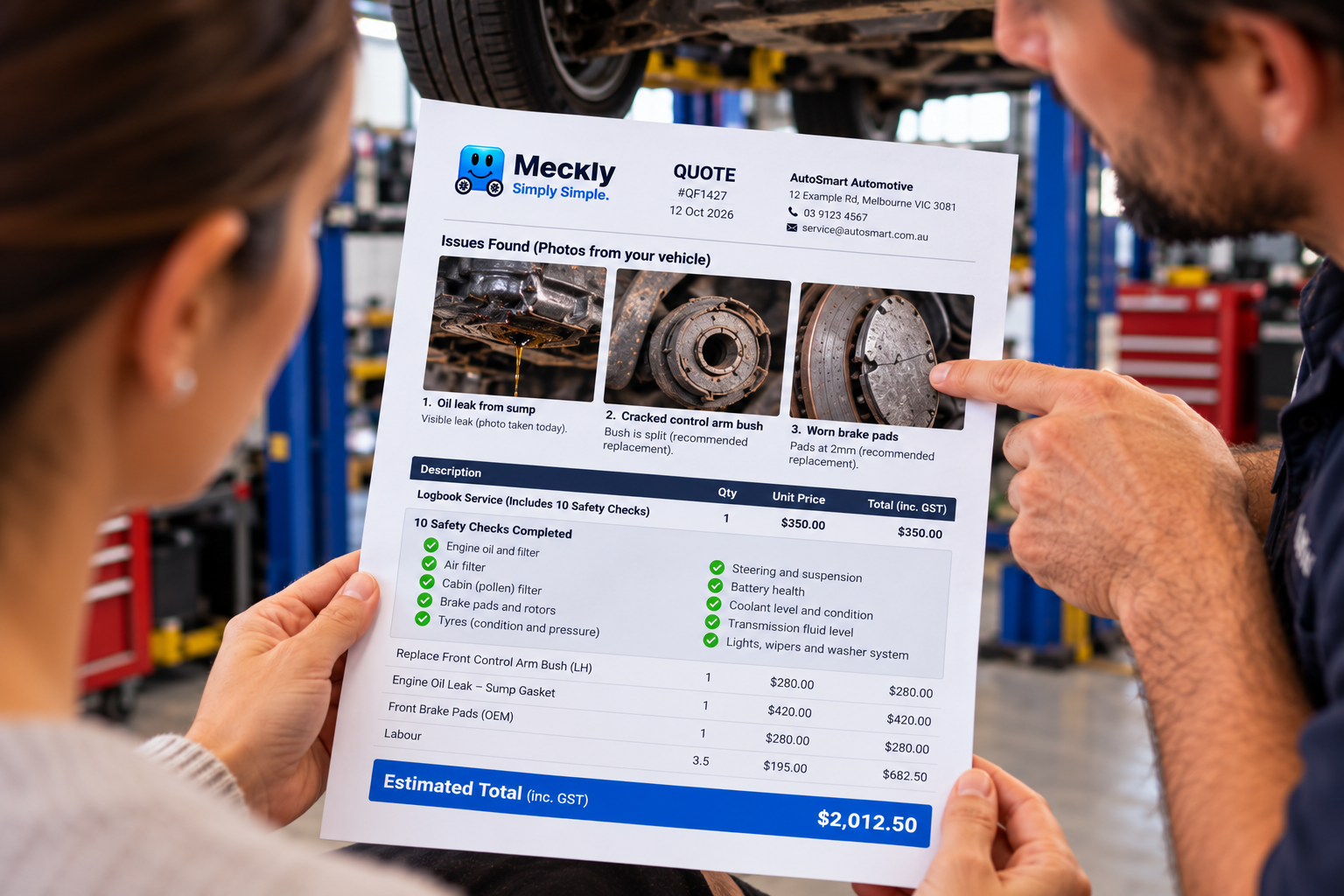
The fix for that happens before the invoice, not after. When a customer approves a quote that includes photos of the actual worn part or the damage, attached directly to the line item, the invoice at the end is not a surprise. It is a summary of something they already agreed to, with proof they already saw.
Most workshop software stores job photos somewhere separate, if it stores them at all. In Meckly, diagnostic images sit directly on the quote itself. The customer sees the photo of the problem next to the price of fixing it, before work starts. When the invoice arrives, there is one source of truth and no room for "I didn't know it was that bad". That cuts disputes at the root, which means fewer invoices that quietly stall.
The parts side of the same problem
Worth naming because it is connected. A job that is held up waiting on a part creates a delay, and a delay means the invoice takes longer to issue. A late invoice is harder to collect than a prompt one, because the customer has mentally moved on.
Getting parts faster is part of keeping cash flowing. SparesIN, the auto-parts marketplace, is a free way to source parts without ringing around. A workshop posts the part it needs, and vetted local suppliers compete to fill it. Suppliers are verified businesses, vouched for by real workshops, so it is properly business-to-business rather than a free-for-all. It does not change how you pay or collect, it just gets the part faster and keeps the job moving toward an invoice you can actually send.
Frequently asked questions about chasing unpaid invoices
Can I charge interest on an overdue invoice in Australia?
Generally yes, but it depends on whether your terms and conditions include an interest clause. According to Sprintlaw, you can charge interest on overdue invoices in Australia if your contract allows for it. Add a clear late-payment interest rate to your terms before you invoice, not after. Check with your accountant or a business solicitor to make sure your terms are enforceable.
How many times should I follow up before writing off an invoice?
Most trade advisers suggest a minimum of four contact attempts across two to three weeks before escalating. A structured sequence of SMS, email, phone call, and a final written notice covers you and gives the customer every reasonable chance to pay. Document every attempt with a timestamp so you have a clear record if it goes further.
What's the most effective first follow-up for a mechanic chasing an unpaid invoice?
A short, friendly SMS sent within 24 hours of the due date lands better than a phone call. Keep it factual, not confrontational. Something like "Hi [name], just a reminder that invoice #[number] for $[amount] was due yesterday. Happy to help if there's a problem, otherwise here's the payment link." Most people pay on that first nudge.
Should I stop releasing a car if a customer hasn't paid?
Under Australian Consumer Law, a repairer generally has a lien over a vehicle until the agreed repair costs are paid, meaning you can hold the car. This is a significant right but one that needs careful handling. Speak to a legal adviser before exercising it, and make sure your terms and conditions spell out this right clearly at the time of booking.
How do I reduce invoice disputes before they become a debt problem?
Disputes almost always start when the customer is surprised by the bill. Attach diagnostic photos directly to the quote so the customer sees the problem alongside the price before work begins. When they approve a quote that includes images of the worn part or the damage, there is very little room to dispute the invoice when the job is done.
Is there software that helps mechanics track unpaid invoices?
Yes. Workshop management platforms like Meckly track invoice status, automate follow-up reminders, and keep a complete paper trail of every customer interaction. The alternative is a manual spreadsheet and a lot of phone calls, which costs hours you never get back and creates gaps in the record when something escalates.
Back to that invoice you were staring at. The one you have half written off in your head. Send the SMS today. Set a reminder for day three. Build the sequence once, and you will never have to decide whether to ring again. The system makes the call for you, and the money turns up more often than you think.
Digital Job Cards Cut Six Phone Calls to One
 WorkshopsNew
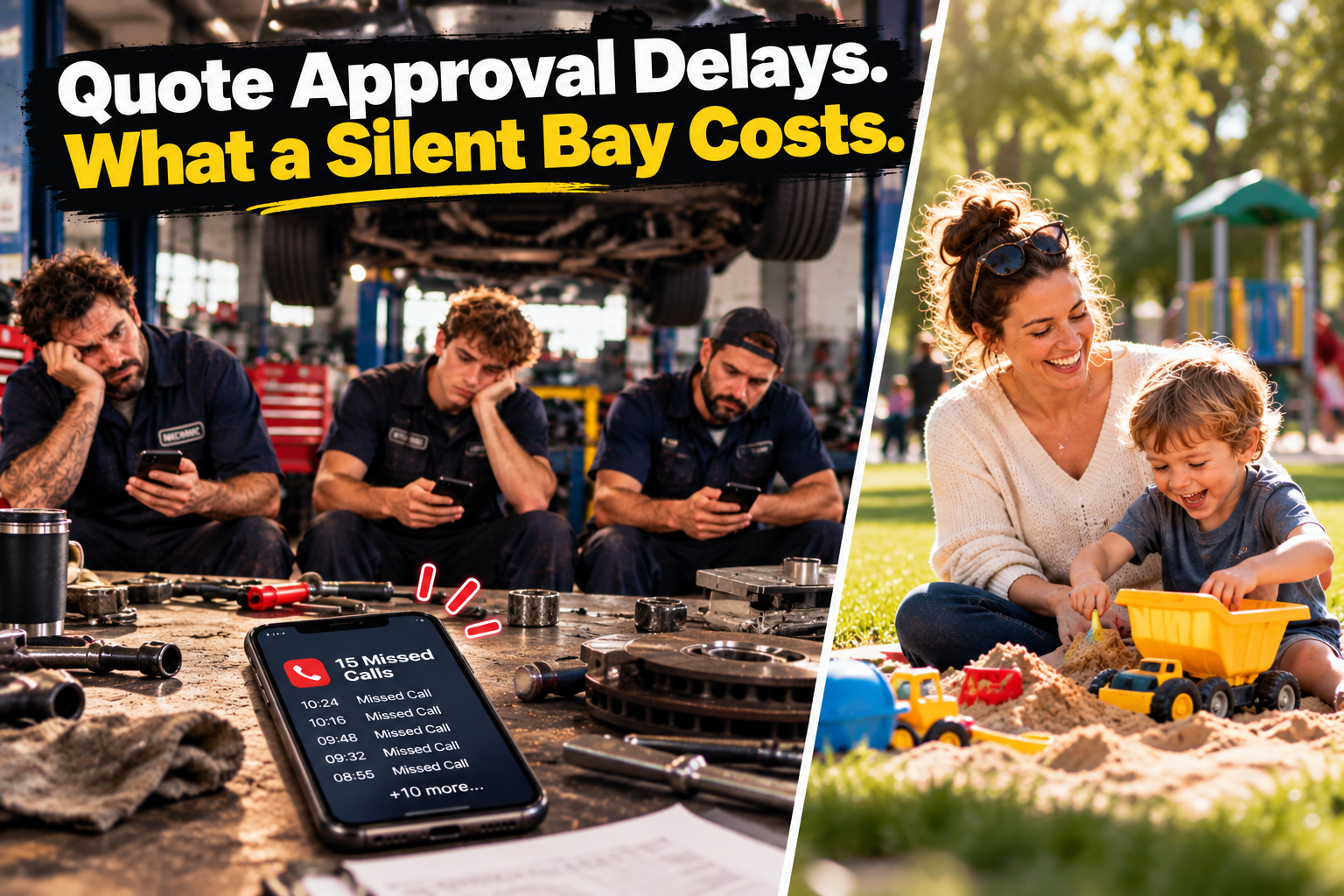
Quote Approval Delays. What a Silent Bay Costs
 Workshop tipsNew
How to Explain a Repair Recommendation Customers Trust
the customer didn't distrust the price. They distrusted the explanation.
 Workshop tipsNew
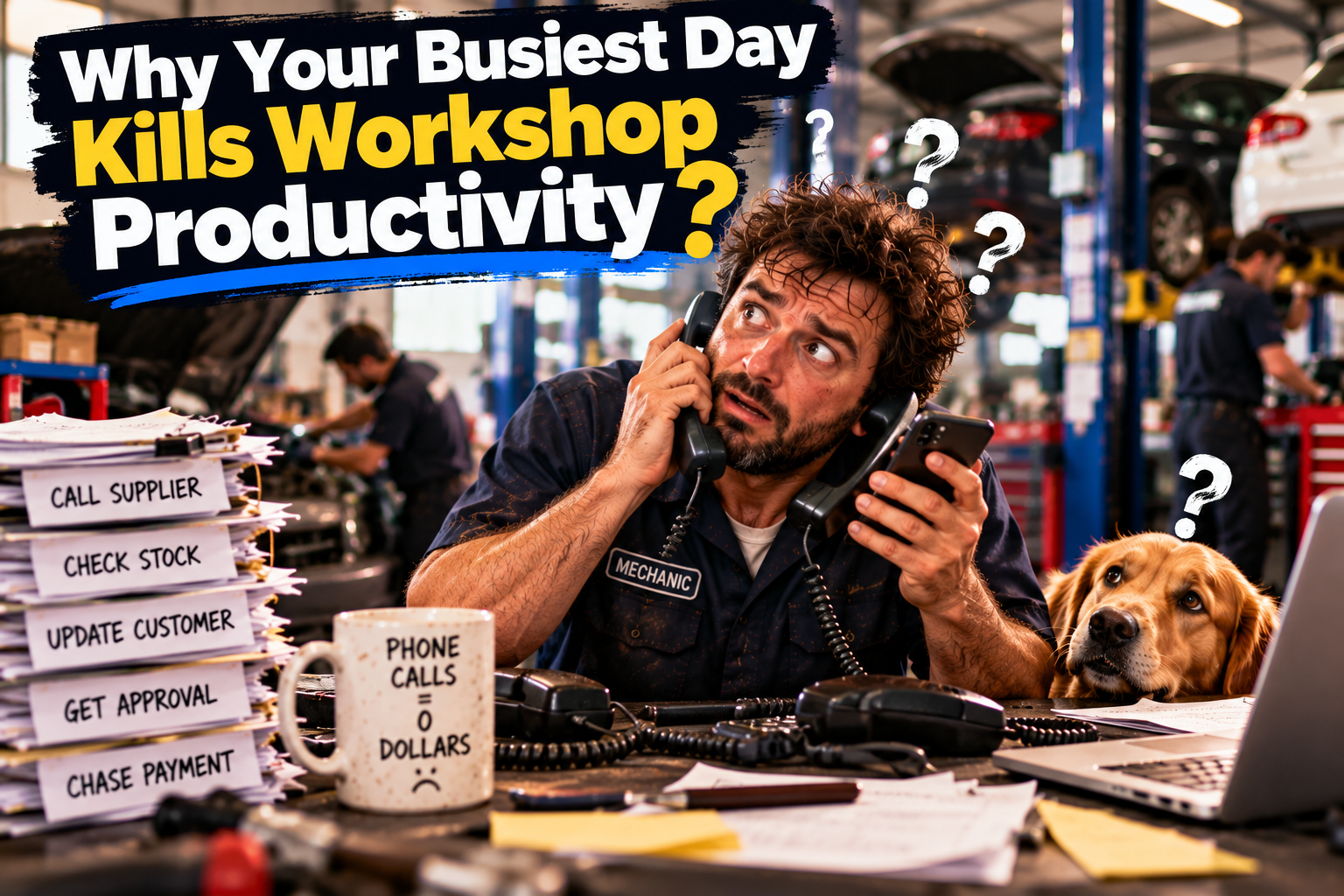
Why Your Busiest Day Kills Workshop Productivity
your busiest day and your most profitable rarely match.