How to Explain a Repair Recommendation Customers Trust
The customer didn't walk out because the repair was too expensive. They walked out because they didn't believe it was real. Here's how to fix that.
In this guide · 8 min read
- Why customers really push back on repair recommendations in Australia
- What actually builds trust when you explain a repair recommendation
- The old way versus the new way: a clear comparison
- What most workshops get wrong when they try to improve this
- The parts problem that nobody mentions
- Where the evidence needs to live
- Frequently asked questions
The customer didn't distrust the price. They distrusted the explanation. That is the sentence most workshop owners never hear, because the customer is already gone by the time it would have been said.
You wrote the recommendation. You checked the work. You knew the job was real and the price was fair. And somehow the customer still left feeling like they'd been worked over. That is not a pricing problem. It is a communication problem, and the good news is it has a straightforward fix.
Why customers really push back on repair recommendations in Australia
Picture this. A customer drops their car in for a service. You find the rear control arm bushes are cracked, the brake fluid is well past spec, and the left CV boot is split and flinging grease. You ring them, list the jobs, give them a total, and wait.
There is a pause. Then the questions start. How bad is it really? Can it wait? Are you sure that needs doing now?
They are not questioning your skill. They are questioning their ability to verify what you are telling them. They cannot see what you saw. All they have is a number and a list of words they half-recognise from a YouTube video. That gap, between what you saw under the car and what they can picture in their head, is where trust breaks down. Every time.
The process of explaining a repair recommendation in Australia has not changed much in thirty years. You find the problem, you price it, you ring the customer, you wait. It is a verbal chain with no receipts. And verbal chains snap under pressure.
What actually builds trust when you explain a repair recommendation
There are four things that work. All four are honest. None of them involve softening the news or dropping the price to avoid the conversation.
- Show before you tell. A photo of the problem, taken while the car is on the hoist, does more convincing than any explanation you can give over the phone. The cracked bush speaks for itself. The leaking seal is not a matter of opinion when you can see it dripping. Take the photo, send the photo, let it do the work.
- Name the consequence, not just the part. "Your control arm bushes are worn" lands differently to "the bushes are worn enough that the steering will feel vague and tyre wear will accelerate, and if one goes completely, the car becomes dangerous to drive." The second version is not scare tactics. It is the actual reason you are recommending the repair. Say it plainly.
- Separate urgent from advisory. If three things need doing but only one is safety-critical right now, say so. "This one needs to happen before you drive it further. These two we can schedule in the next month or two." Customers trust a workshop more when it tells them what can wait. It signals that the recommendation is about the car, not the invoice.
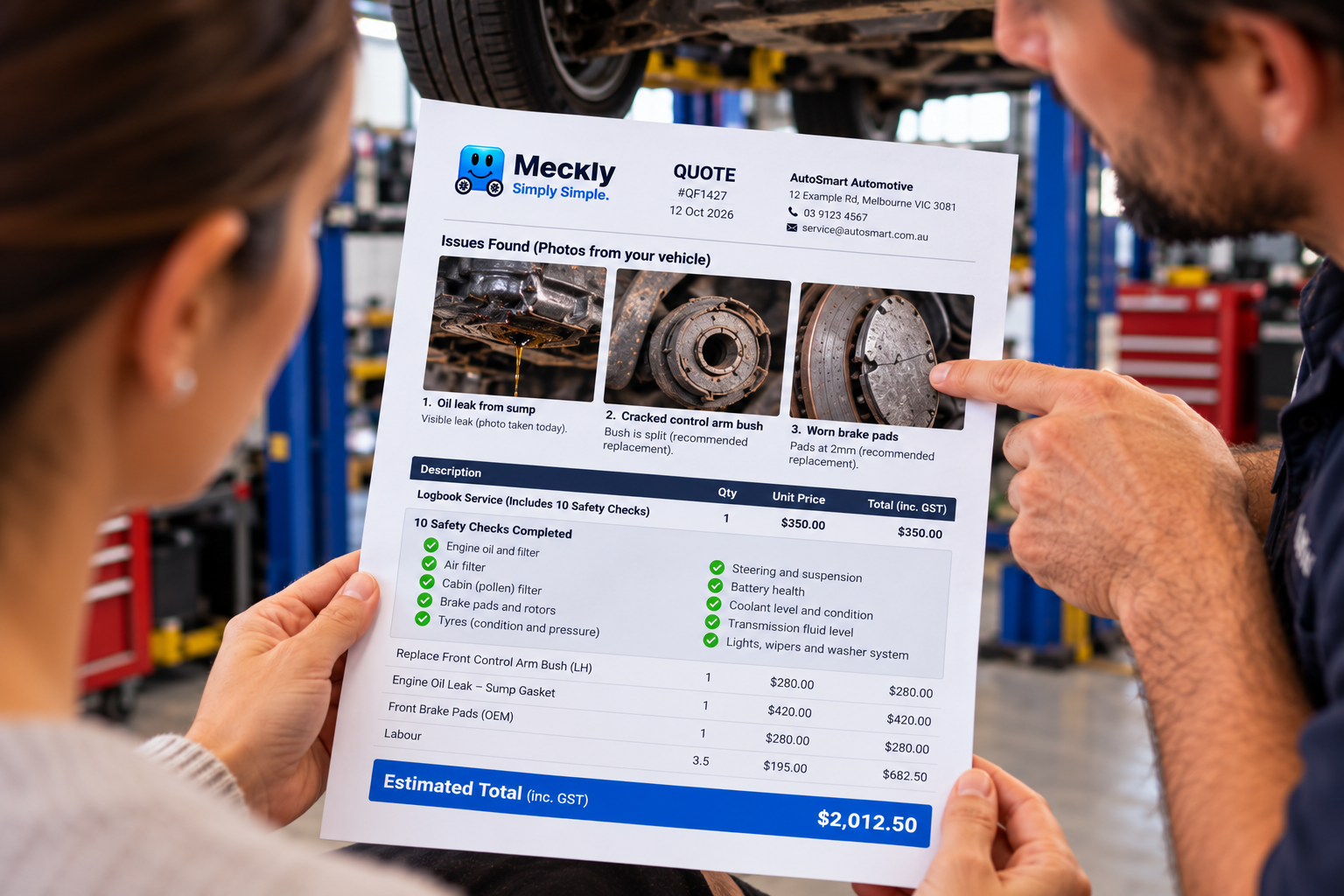
- Put it in writing, with the evidence attached. A phone call is a conversation. A written quote is a record. When the photo of the problem lives on the same page as the line item and the price, the customer has one thing to look at, share with a partner, or screenshot and send to their brother-in-law who "knows about cars." The written quote with evidence closes more jobs than the best verbal pitch ever will.
The old way versus the new way: a clear comparison
Most workshops still run on what could be called the verbal-and-hope method. Ring the customer, explain the job in trade language, give a price, and hope they say yes. Some do. The ones who say no rarely explain why, and the workshop never knows whether the issue was price, trust, or just timing.
The comparison below is blunt because it needs to be.
| The old way | The better way |
|---|---|
| Phone call with verbal description | Written quote with photo of the problem attached |
| Technical part names the customer doesn't know | Plain-English description of the issue and the consequence |
| One total price with limited breakdown | Itemised quote with urgent and advisory items clearly separated |
| Customer has to trust memory of the phone call | Customer has a record they can read, save, and share |
| Disputes resolved by who remembers the call best | Disputes resolved by the quote, the photo, and the approval timestamp |
The verdict is not close. The second column wins on trust, on job approvals, and on the number of times you have to re-explain yourself after the fact.
What most workshops get wrong when they try to improve this
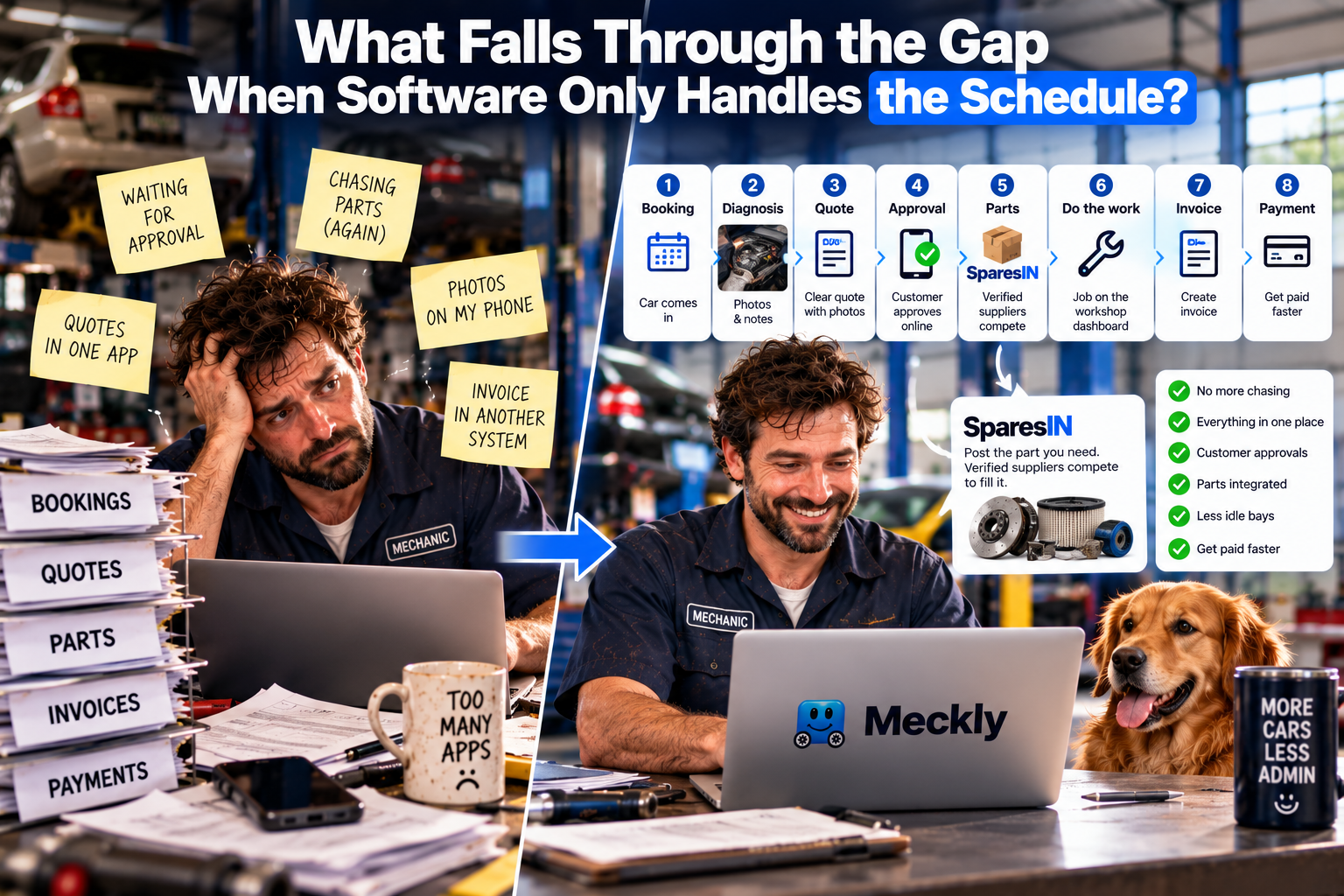
A lot of shops realise the phone-call method is leaking trust and decide to fix it by adding a separate photo folder, a notes app, or a WhatsApp thread with the customer. Now they have three places to check when a dispute comes up. The photo is in the camera roll. The note is in the app. The quote is in the job management system. None of them talk to each other.
The customer asks a question. You have to go hunting across three platforms to find the answer. That delay, and that fumbling, is its own trust signal. And not the good kind.
The other mistake is trying to win trust through price. Dropping the recommendation total to make the conversation easier does two things. It trains customers to push back on every quote in the future. And it slowly hollows out the margin that keeps the workshop viable. Trust is not built on discounting. It is built on evidence.
Digital Job Cards Cut Six Phone Calls to OneRead nextDigital Job Cards Cut Six Phone Calls to OneThe parts problem that nobody mentions
There is a related issue that makes this whole thing harder. You cannot give a confident, itemised repair recommendation if you do not know what the part is going to cost until you have rung three suppliers and waited on hold. So the recommendation sits in draft, the car sits in the bay, and the customer sits waiting for a call that keeps getting delayed.
Some workshops have started using SparesIN, the auto-parts marketplace, to cut that loop short. Instead of ringing around, a workshop posts the part it needs and vetted local suppliers compete to fill it. The suppliers are verified shops, vouched for by real workshops, not a free-for-all open to anyone with a spare on a shelf. The demand drives the speed, and because it integrates straight into a Meckly quote, the part price lands on the same document as everything else. No sticky note, no separate tab, no re-keying a number from a text message.
It does not change how the workshop pays or collects. That all stays the same. It just means the quote is ready faster, and cleaner records make things like returns and re-orders a lot less painful.
Where the evidence needs to live
This is the part most workshops have not solved yet, and it is worth saying plainly. When a customer receives a quote, the photo of the problem needs to be on that quote. Not in a separate email. Not in a different app. Not in a folder you have to go find when they ring back two days later.
The photo of the problem, right next to the line item and the price. That is one source of truth. The customer sees what is wrong and what it costs in the same glance. There is nothing to reconcile, nothing to dig up, nothing to argue about later.
Most workshop management platforms store images somewhere separate, or need another piece of software to handle it. In Meckly, the diagnostic images are saved directly on the quote itself. The photo lives next to the line item. The customer sees the evidence and the cost together, which is exactly where both things need to be for the recommendation to land cleanly. It is a small structural difference that changes the whole conversation.
When the photo is on the quote, the recommendation stops being your word against their doubt. It becomes a document. And workshops that operate by documents have fewer disputes, more approvals, and customers who come back because they felt informed, not managed.
Frequently asked questions
How should a mechanic explain a repair recommendation without losing the customer's trust?
Show the evidence before you name the price. A photo of the worn part, placed right next to the line item and the cost, removes the gap between what you saw and what the customer imagines. Plain language beats technical jargon every time. The customer's job is to say yes or no, not to decode a workshop report.
Why do Australian customers push back on repair quotes?
Usually it is not the price itself. It is the feeling that the recommendation came from nowhere, that they are being told rather than shown. When a customer cannot see what you saw, they fill the gap with suspicion. The fix is evidence, not a cheaper price.
Is it better to call or message a customer about a repair recommendation?
For anything beyond a simple filter, a message with the quote and a photo attached gives the customer time to read it on their terms, forward it to a partner, and come back with a decision rather than a defensive question. A phone call puts them on the spot. Written plus visual wins for trust.
What information should be on a repair quote to help the customer say yes?
The part name in plain English, what the problem actually causes if left alone, the photo of the issue, and the price. That is the whole loop. Everything else is optional. If the customer can read the quote and picture the problem, they can make a confident decision.
How do independent Australian workshops compete with dealerships on customer trust?
By being more transparent, not less. Dealerships rely on brand trust. Independent workshops earn it job by job, through clear explanations, honest recommendations, and records the customer can actually read. A well-documented quote from a good independent shop is more convincing than a dealer invoice the customer never really understood.
Does showing photos of a problem really help a customer approve a repair?
Yes, consistently. When a customer sees the cracked bush, the leaking seal, or the scored rotor in a photo attached to the quote, the repair stops feeling like an upsell and starts feeling like obvious maintenance. The photo does the convincing so you do not have to.
Back to that customer who left without booking the work. The recommendation was real. The price was fair. The only thing missing was the photo, sitting on the quote, doing the explaining for you. That is not a big fix. But it is the right one.