Fill Cancelled Bays the Same Day, Not Tomorrow
A cancelled booking doesn't have to mean a dead bay. Here's how Australian workshop owners are filling slots the same day, without the panic.

In this guide · 8 min read
- Why Cancelled Bays Stay Empty (It's Not Bad Luck)
- What Are Your Real Options When a Bay Goes Down?
- The Old Way vs the Way That Actually Fills Bays
- How to Build a Same-Day Gap System Before You Need It
- What Types of Jobs Should Fill Same-Day Gaps?
- Where Workshop Software Makes This Automatic
- Frequently Asked Questions
The invoice on the wall says the bay is booked until 3pm. Then the phone rings at 8:47am. The customer can't make it. Family thing, work thing, doesn't matter. The bay is empty and it stays empty for five hours unless you do something about it in the next twenty minutes.
That's the moment most workshops lose. Not the cancellation itself. The twenty minutes after it.
Workshop bay utilisation same day is the difference between a business that earns well and one that earns just enough. A single idle bay for a full day costs real money in floor space, in wage hours, in the fixed costs that run whether the lift moves or not. Do that twice a week and it adds up faster than any bad debt.
The good news is that the fix isn't complicated. It's just a process most shops don't have yet.
Why Cancelled Bays Stay Empty (It's Not Bad Luck)
The bay stays empty because there's no plan for this exact moment. When the cancellation lands, the options that exist feel too slow. Ring a customer? You'll leave a voicemail. Find a carry-over job? The part isn't here yet. Squeeze in a walk-in? You weren't expecting one.
The bay sits idle, and the clock invoices nobody.
The problem isn't the cancellation. The problem is that the system for filling gaps doesn't exist until the gap appears, and by then you're already behind. Every workshop that consistently fills same-day slots has built a short list of options before they needed it.
What Are Your Real Options When a Bay Goes Down?
Let's be honest about every method, including the ones that don't work as well as people think.
- The phone round. You ring two or three regular customers and hope someone is free and local. Sometimes this works, especially in smaller towns where regulars pop in easily. But the voicemail rate is high, the back-and-forth burns time, and by the time someone confirms, you've lost an hour. It's better than nothing and worse than most of what follows.
- Social media posts. Some shops throw a "we have a slot today" post on Facebook or Instagram. Results are unpredictable. You might get a response from someone who books in and cancels that afternoon. You might get nothing. It costs you nothing to try, but don't build your strategy around it.
- Walk-in traffic. If your workshop is on a main road with good visibility, this is underrated. A simple sign or a dashboard message on your website that shows real-time availability can pull in someone who's been putting off a tyre rotation or a minor service. For workshops off the main strip, this is much less reliable.
- A waitlist of carry-over jobs. This is the one that actually works consistently. Jobs that are approved, ready to go, just waiting on a slot or a part. If the part is already on your shelf, the job can start in an hour. If it isn't, that's where the parts sourcing speed matters.
- A customer waitlist. Separate from carry-over jobs. These are customers who asked if you had anything sooner. They said yes when you explained you'd ring if a gap opened. They're pre-sold. All you're doing is notifying them.
The Old Way vs the Way That Actually Fills Bays
| Old way | Faster way |
|---|---|
| Ring around until someone picks up | Message a short waitlist simultaneously |
| Hope carry-over jobs have parts already | Confirm parts availability before slotting the job |
| Decide on the fly what fits in the gap | Keep a ranked list of gap-ready jobs by duration |
| Parts chase eats the morning | Parts request goes out while you're already booking the job |
The verdict is obvious once you see it laid out. The old way depends on luck. The faster way depends on a list and a process you build once.
How to Build a Same-Day Gap System Before You Need It
This takes about thirty minutes to set up and saves hours over the course of a month.
- Create a waitlist inside your scheduling software. Every customer who books and asks about a sooner slot gets added. Name, number, rough job type, and how much notice they need. Two hours minimum notice is a reasonable filter. Less than that and the no-show rate climbs.
- Tag carry-over jobs by parts status. Three categories only. Parts on hand. Parts available locally within the hour. Parts on order, not here yet. When a bay opens, you sort by the first two categories and work down the list.
- Sort carry-over jobs by duration. A two-hour gap needs a two-hour job, not a four-hour one. Knowing the job duration upfront means you're not fitting a square peg into a round hole at 9am when the pressure is on.
- Speed up parts sourcing for carry-overs. The most common reason a carry-over job can't fill a gap is that the part still isn't confirmed. SparesIN, the auto-parts marketplace, is worth knowing about here. A workshop posts the part it needs and vetted local suppliers compete to fill it, integrated straight into a Meckly quote. Unlike open marketplaces, suppliers on SparesIN are verified businesses vouched for by real workshops, so it's properly business-to-business. It doesn't change how you pay or collect, it just means you're not spending your morning on hold to find out if a part is in stock. That changes what's possible when a gap opens at 9am.
What Types of Jobs Should Fill Same-Day Gaps?
Not every job is gap-ready. Here's a short, honest breakdown.
Good fits for same-day workshop bay utilisation:
- Roadworthy or safety checks where the car is already in the yard
- Tyre rotations and balance
- Minor fluid services
- Brake pad replacements where pads are on the shelf
- Diagnostic scans on carry-over vehicles
- Follow-up inspections after a previous repair
Poor fits unless parts are confirmed:
- Any job requiring a part that isn't stocked locally
- Jobs where the customer still hasn't approved the quote
- Work on vehicles you haven't inspected yet
The rule is simple. If the job can start within an hour of the customer saying yes, it belongs on your gap-ready list. If it needs three phone calls and a parts chase before a spanner turns, it doesn't.
Where Workshop Software Makes This Automatic
When all of this lives in your head, it works until you're busy. Then it doesn't work at all.
A workshop management platform like Meckly keeps the waitlist, the carry-over jobs, and the parts status in one place. When a bay opens, you're looking at a real list, not trying to remember who said they were flexible. The quote is already there. The parts status is already there. The customer's approval or lack of it is already there.
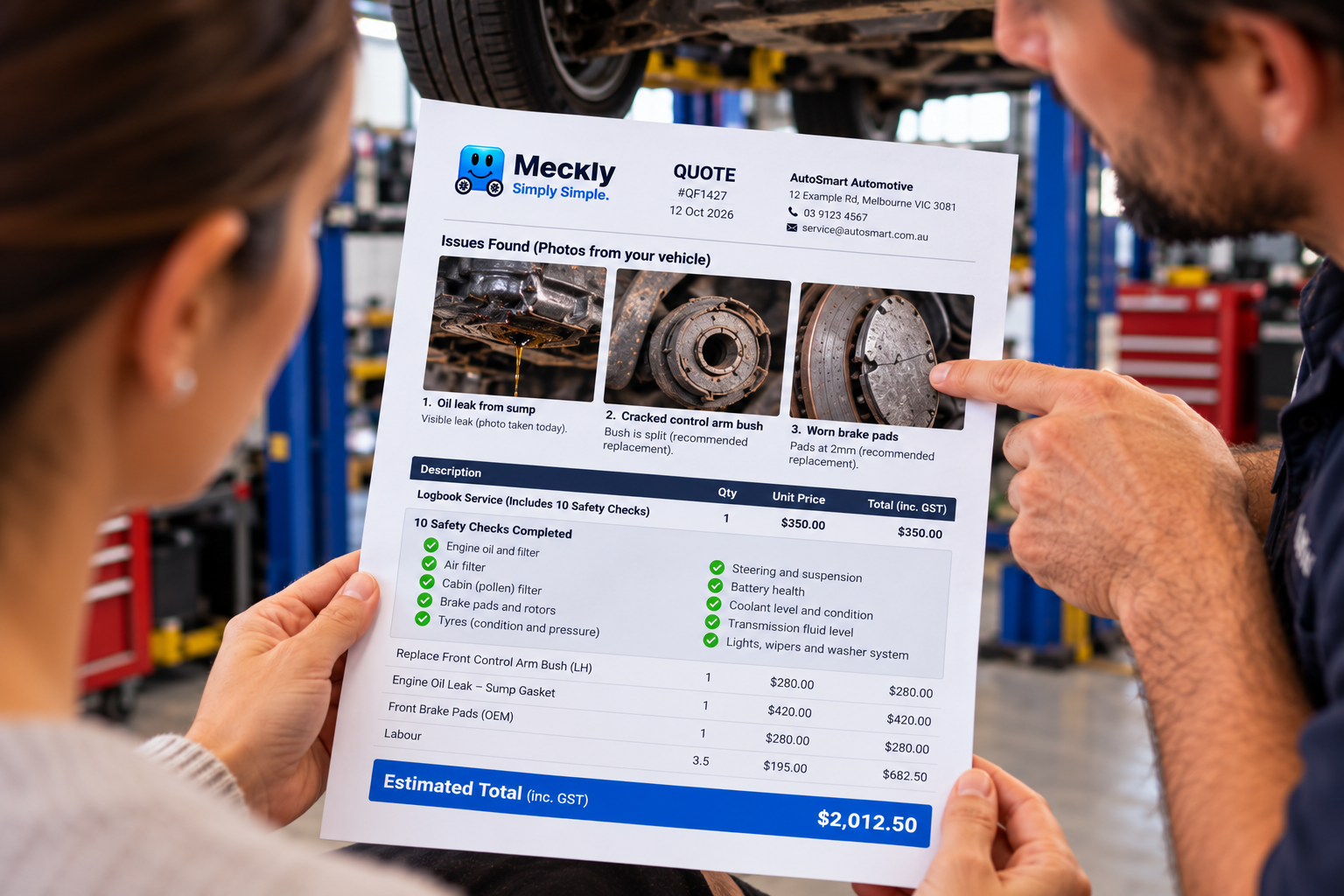
One feature worth mentioning because most platforms miss it: in Meckly, diagnostic images are saved directly on the quote itself. The photo of the problem sits next to the line item and the price the customer sees. No second app, no separate folder. That matters for same-day jobs because when a customer gets a last-minute slot and a quote arrives, the photo of what's wrong travels with the price. Trust lands faster. Approvals come back faster. The bay fills faster.
If you want to see how it works in your shop, the done-for-you onboarding gets you set up without a Friday afternoon wasted on configuration.
Frequently Asked Questions
How can a workshop fill a cancelled bay the same day?
The fastest method is a short list of customers already waiting for a slot, whether they're chasing a warrant, a minor service, or a carry-over job. A quick message to two or three of them fills most gaps before the morning is gone. Pair that with parts you've already sourced or can source fast, and the bay earns its keep.
What types of jobs work best for same-day workshop bay utilisation?
Jobs where parts are already on hand or can arrive within the hour work best. Warrant of fitness checks, tyre rotations, fluid services, minor brake jobs, and carry-over diagnostics are the sweet spot. Avoid slotting in any job that needs a special-order part you haven't confirmed yet.
Should I discount to fill a last-minute bay?
Not necessarily. Most customers waiting on a slot take it at full price because availability is the thing they wanted. Discounting trains them to wait for a deal rather than book ahead. If you want to incentivise loyalty, offer priority booking for the next visit instead.
How do digital waitlists differ from a simple phone list?
A phone list lives in your head or on a sticky note and disappears when you're busy. A digital waitlist inside your workshop management software sends the message, records the response, and attaches the outcome to the job card automatically. Nothing falls through the gap when you're under the car.
How does faster parts sourcing help fill a cancelled bay?
The reason most last-minute slots stay empty is that the job can't be completed without a part you don't have. If you can confirm parts availability in minutes rather than hours, a wider range of carry-over and same-day jobs become viable. That's where marketplaces like SparesIN, the auto-parts marketplace, can help by letting vetted local suppliers compete to fill the request fast.
What should I do if I keep getting same-day cancellations?
Look at your confirmation process first. A booking that gets a reminder the evening before and a short confirmation message the morning of cancels far less often than one that gets nothing. Most workshop software can automate this. If late cancellations are still common, a light deposit policy on longer jobs is worth considering.
Back to that 8:47am phone call. The cancellation still happened. But now you've got a list, a parts status board, and two customers who said they'd come in if something opened. The bay is booked by 9:15am. The day earns what it was supposed to earn. That's the whole idea.
Digital Job Cards Cut Six Phone Calls to One
 WorkshopsNew
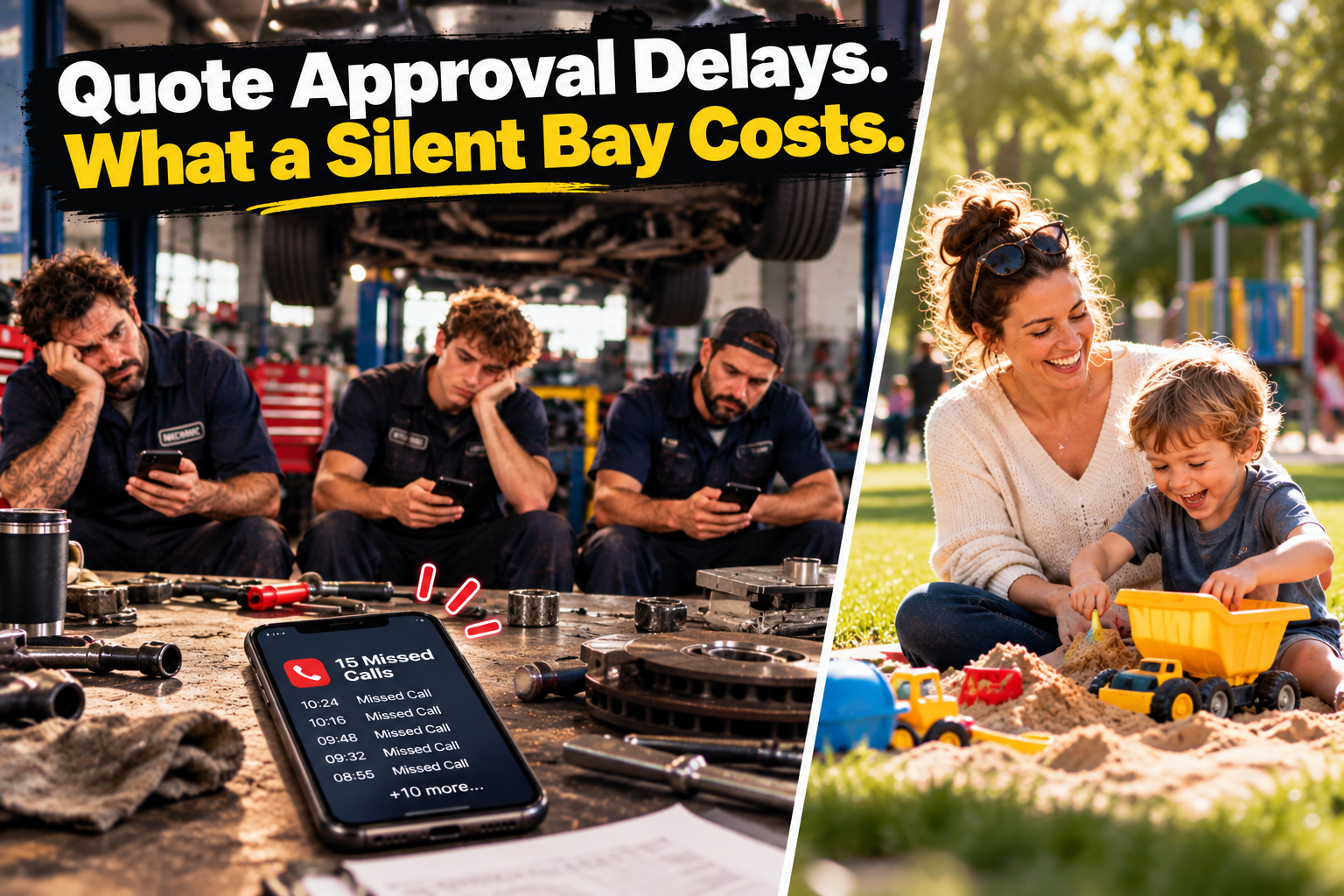
Quote Approval Delays. What a Silent Bay Costs
 Workshop tipsNew
How to Explain a Repair Recommendation Customers Trust
the customer didn't distrust the price. They distrusted the explanation.
 Workshop tipsNew
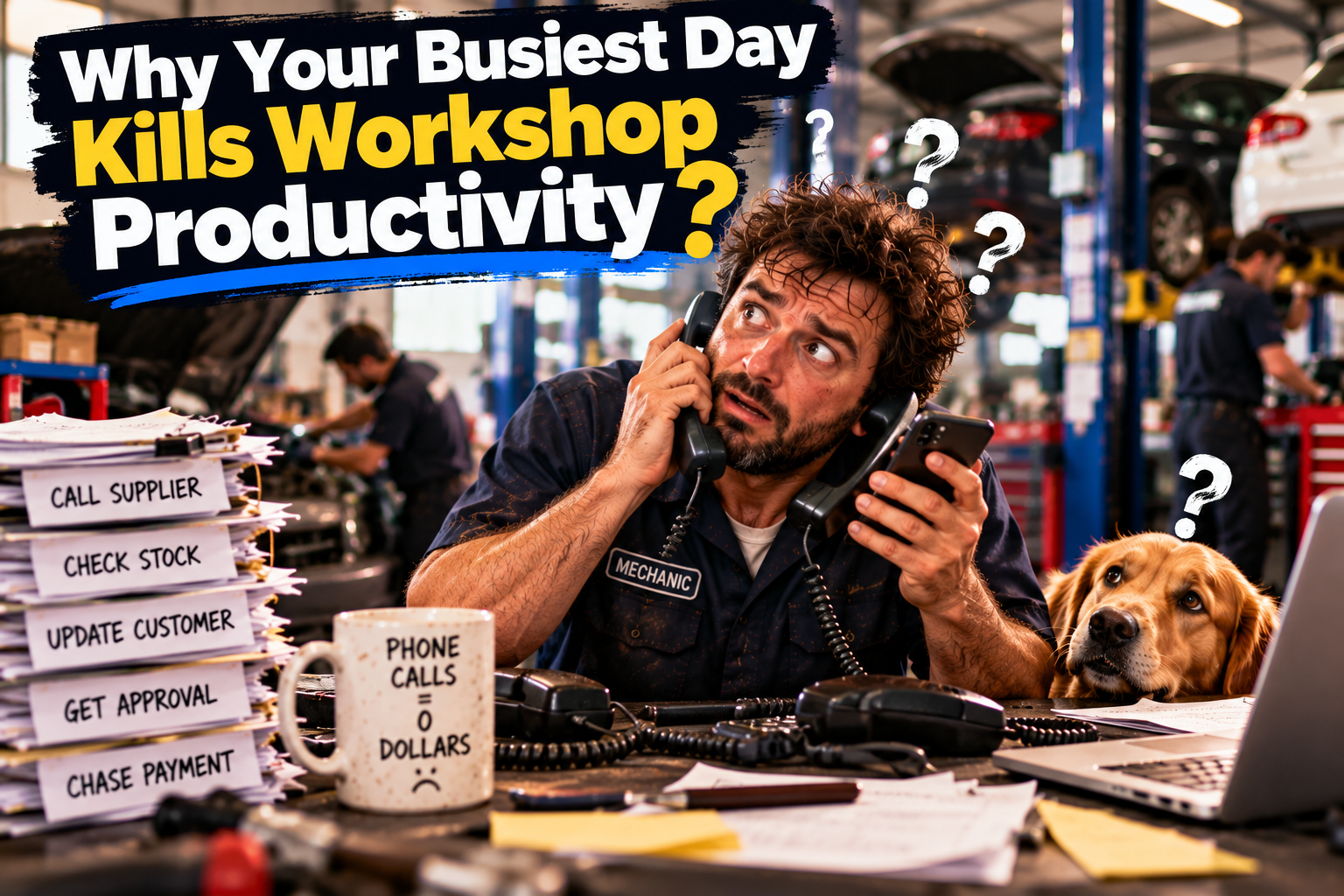
Why Your Busiest Day Kills Workshop Productivity
your busiest day and your most profitable rarely match.